What is Harmonic Pattern Finder v3 Indicator?
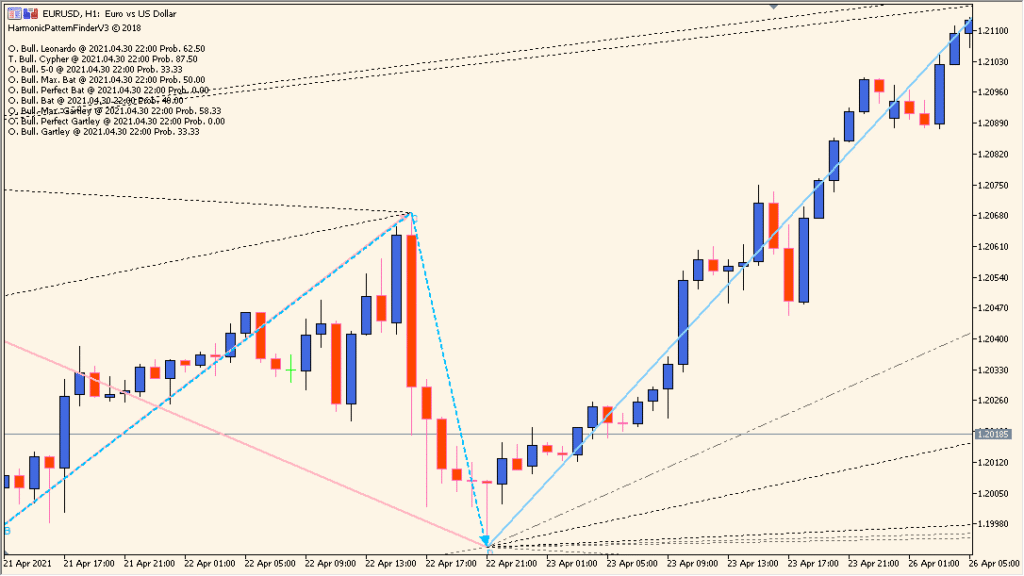
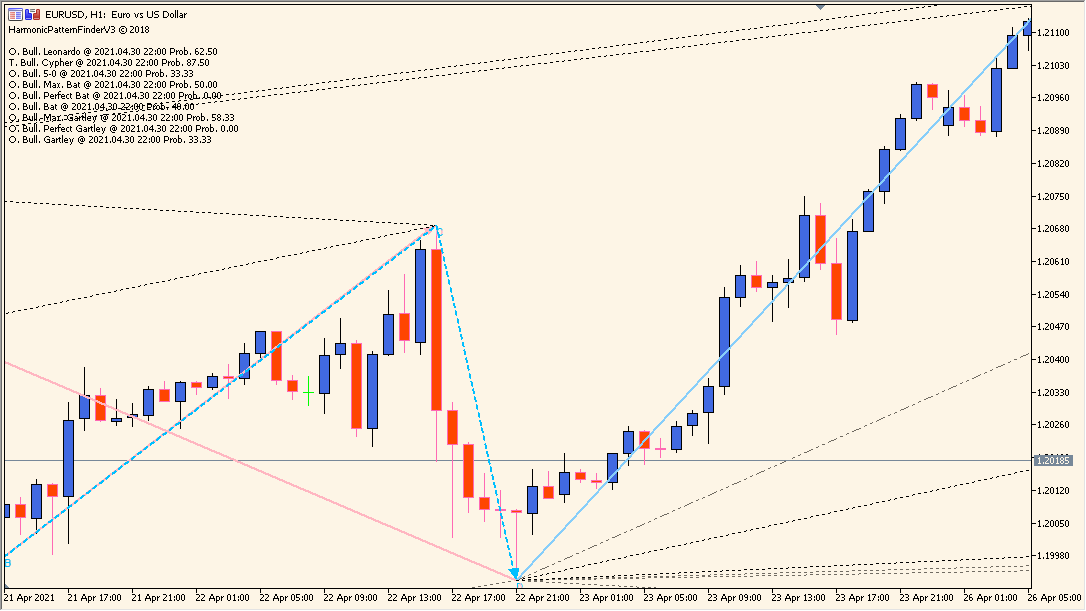
Harmonic Pattern Finder v3.3.2 is an MT5 chart indicator that marks ratio-based harmonic structures such as Gartley, Bat, Butterfly, and Crab patterns. ZigZag, ATR, ratio, color, and label settings shape the visible chart annotations.
The drawings organize swing relationships and displayed completion areas for visual comparison. Pattern labels are chart references and do not establish a future reaction or outcome.
How to Use It in Practice
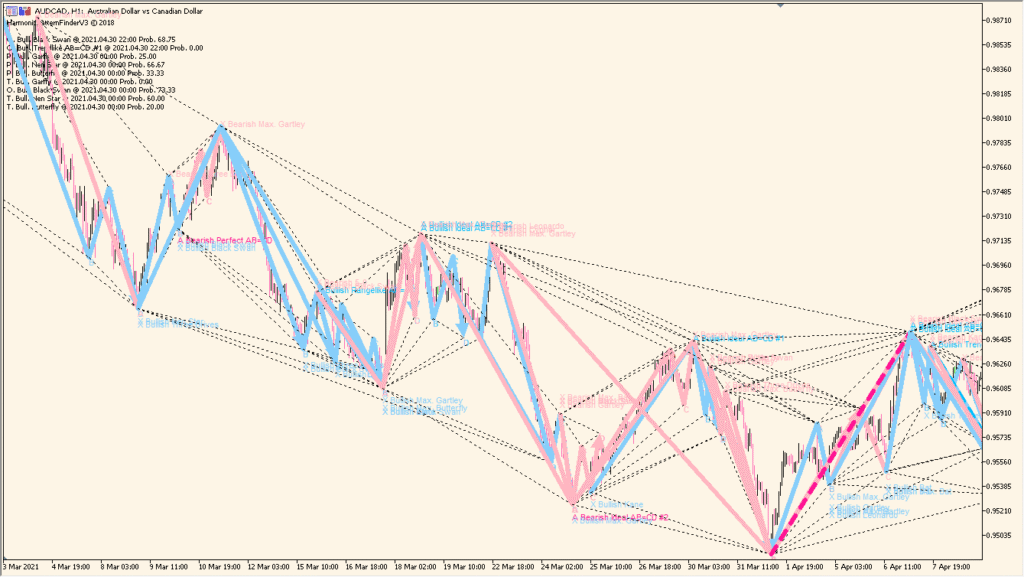
Inspect the ratio-based legs and labels together: blue lines are bullish-pattern markings and pink lines are bearish-pattern markings, with many overlapping lines possible:
- Separate the more prominent blue or pink pattern drawing from the surrounding Fractal and Fibonacci lines before comparing the legs.
- Use the chart's pattern labels and ratio geometry to review the completed drawing, while keeping the line density in mind.
- Adjust the available display settings to reduce clutter when overlapping lines make individual patterns hard to distinguish.
Multiple harmonic structures can be reviewed on one chart, ratio labels make the geometry easier to inspect, and filters help manage chart density.
MT5 Indicator Parameters
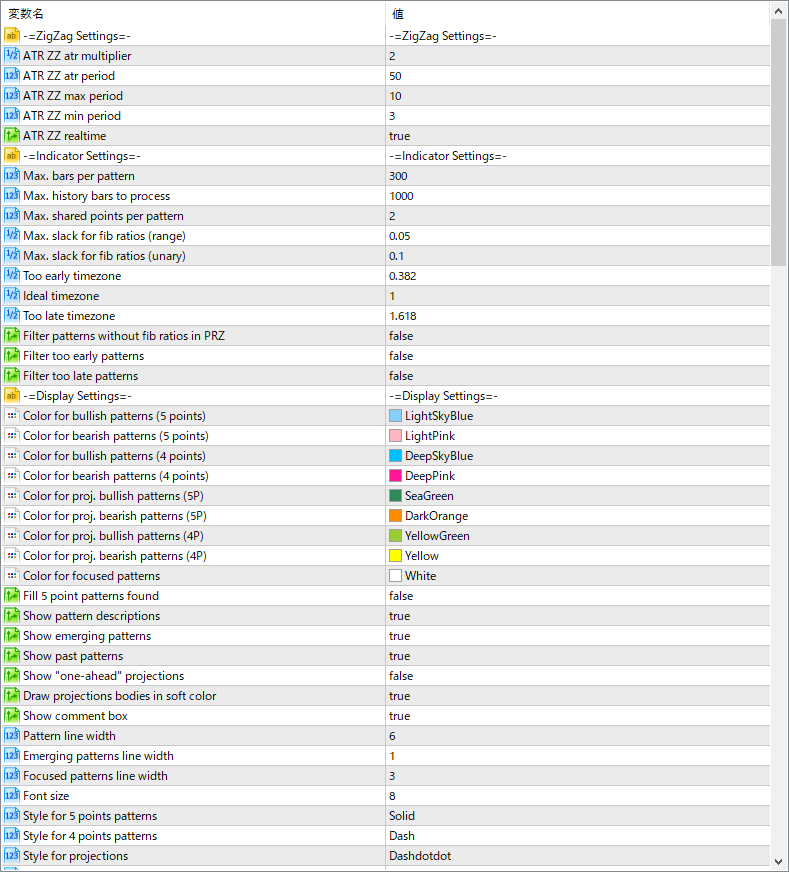
The screenshot above shows the default input parameters in the MT5 settings window.
| Parameter | Description |
|---|---|
| ATR ZZ atr multiplier | Controls the sensitivity of the ATR-based ZigZag. A higher multiplier reduces the number of swings detected. |
| ATR ZZ atr period | Sets the ATR period used for the ZigZag calculation. |
| ATR ZZ max period | Defines the maximum number of bars allowed between two ZigZag points. |
| ATR ZZ min period | Defines the minimum number of bars required before a new ZigZag point can form. |
| ATR ZZ realtime | Enables or disables real-time recalculation of ZigZag points as new ticks arrive. |
| Max. bars per pattern | Limits how many bars can be included in a detected harmonic pattern. |
| Max. history bars to process | Defines how many historical bars the indicator scans for pattern detection. |
| Max. shared points per pattern | Sets how many swing points can be shared between overlapping patterns. |
| Max. slack for fib ratios (range) | Adjusts the allowable tolerance between expected and actual Fibonacci ratio values for pattern validation. |
| Max. slack for fib ratios (unary) | Similar to range slack but applied to single Fibonacci ratio checks. |
| Too early timezone | Defines the minimum ratio requirement for early stage pattern points. |
| Ideal timezone | Sets the optimal zone where pattern symmetry should align. |
| Too late timezone | Defines the upper boundary where a pattern becomes invalid because price moved too far. |
| Filter patterns without fib ratios in PRZ | Removes patterns that do not match Fibonacci requirements in the Potential Reversal Zone. |
| Filter too early patterns | Filters patterns that complete before sufficient ratios are formed. |
| Filter too late patterns | Ignores patterns that complete after acceptable ratio zones. |
| Color for bullish patterns | Sets the display color for detected bullish harmonic structures. |
| Color for bearish patterns | Sets the display color for detected bearish harmonic structures. |
| Color for projected bullish patterns | Defines the color for projected (incomplete) bullish pattern outlines. |
| Color for projected bearish patterns | Defines the color for projected (incomplete) bearish pattern outlines. |
| Color for PRZ zones | Sets the visualization color used for potential reversal zones. |