What is relative-price-channel Indicator?
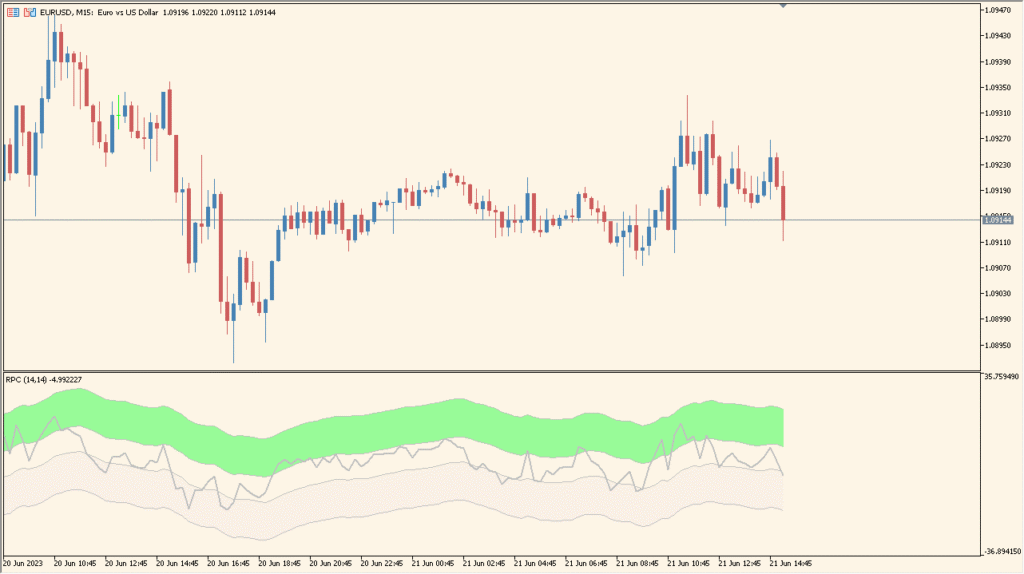
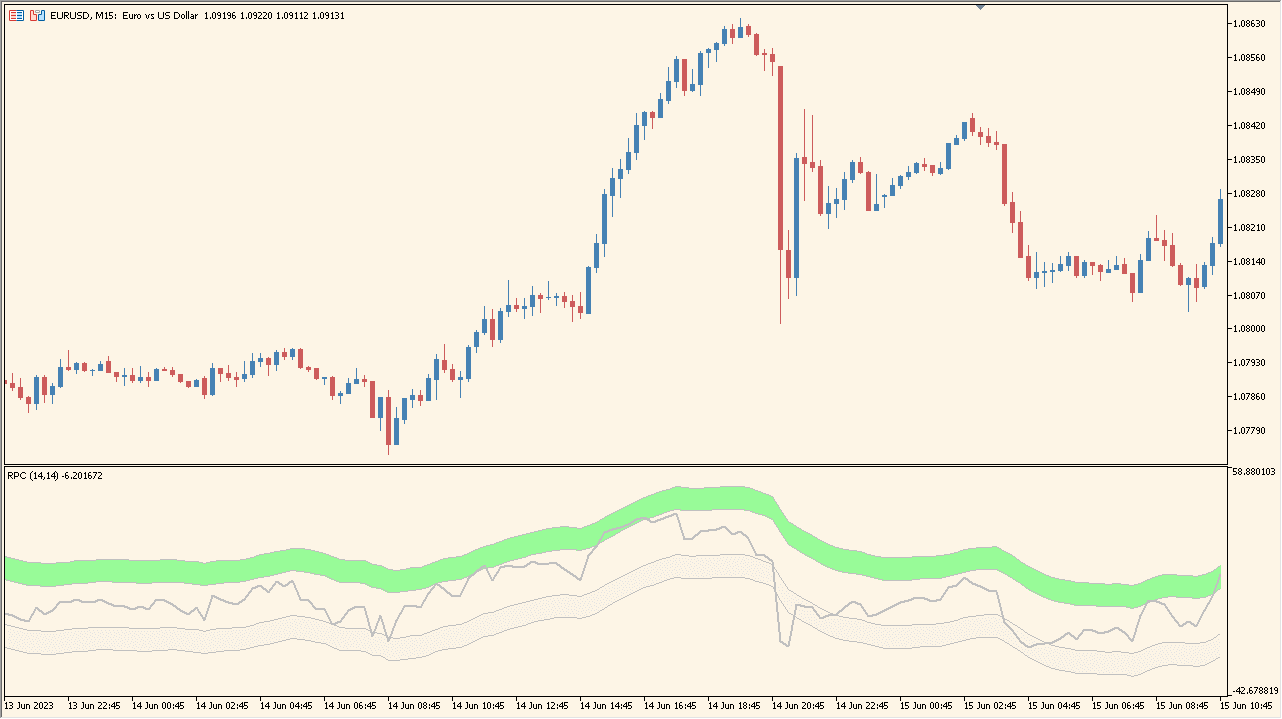
Relative Price Channel is an MT5 indicator that converts RSI-derived values into a shaded channel with upper, neutral, and lower reference areas. RSI period, price source, smoothing, and percentage levels control the display.
The channel provides visual context for comparing relative price position and changing momentum. Its zones are references for review and do not imply a specific future price change.
How to Use It in Practice
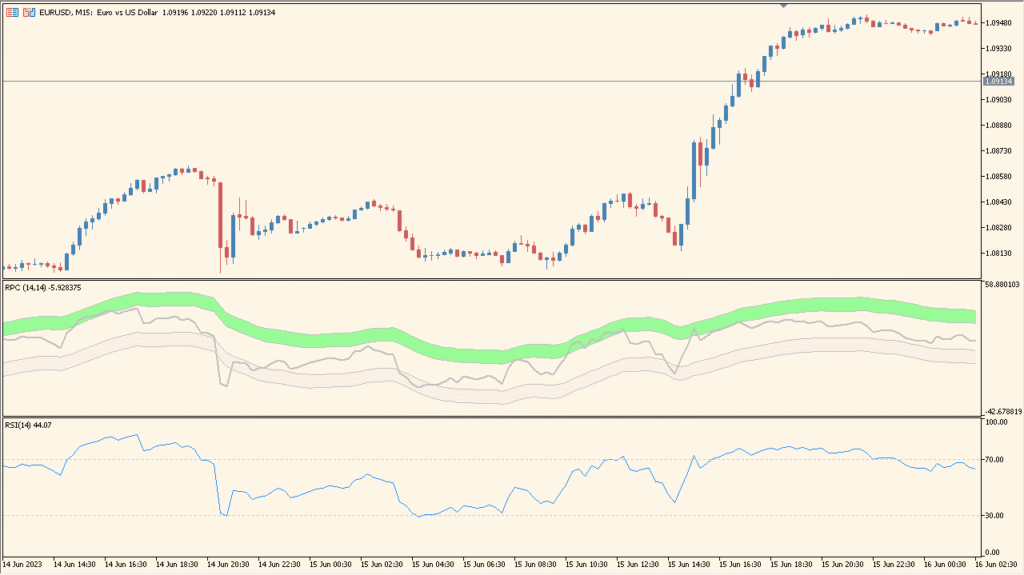
Read the RSI-derived upper and lower bands with the changing middle area; the bands follow RSI and can become too easy to exceed at their default level settings:
- Compare the upper, neutral, and lower parts of the shaded channel with the selected chart timeframe.
- When changing the band thickness, set Upper neutral level% and Lower neutral level% as a pair; 60 and 40 is one example that totals 100.
- Use the RSI and smoothing inputs to inspect how the channel follows the underlying RSI calculation.
RSI context is presented as a readable channel, neutral and extreme areas are easy to distinguish, and settings support different smoothing views.
MT5 Indicator Parameters
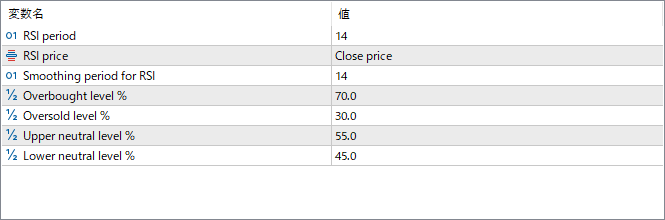
The screenshot above shows the default input parameters in the MT5 settings window.
| Parameter | Description |
|---|---|
| RSI period | Sets the number of bars used for RSI calculation. This controls the sensitivity of the channel movement. |
| RSI price | Specifies which price type is used for the RSI input, such as close or other price options. |
| Smoothing period for RSI | Defines the smoothing applied to the RSI output to create a more stable channel. |
| Overbought level % | Sets the percentage level where the channel marks conditions as overbought. |
| Oversold level % | Sets the percentage level where the channel marks conditions as oversold. |
| Upper neutral level % | Defines the upper boundary of the neutral zone, separating normal conditions from bullish pressure. |
| Lower neutral level % | Defines the lower boundary of the neutral zone, separating normal conditions from bearish pressure. |